Search engine optimization is currently experiencing its biggest shift in over two decades. For years, the digital strategy playbook was straightforward: target a specific keyword, optimize your on-page elements, earn quality backlinks, and compete for a spot on Google’s coveted first page.
However, user behavior has changed dramatically. When consumers have a question today, they no longer want to click through ten blue links, open multiple tabs, and skim long-winded paragraphs to find what they need. They want instant, direct, synthesized answers, whether it's through Google AI Overviews, Perplexity, ChatGPT Search, or voice assistants.
This evolution has given rise to a critical discipline: Answer Engine Optimization (AEO). Understanding AEO and how it works alongside traditional SEO is no longer optional for business growth; it is the core of modern online visibility.
What Is Answer Engine Optimization (AEO)?
Answer Engine Optimization (AEO) is the practice of structuring and engineering your digital content so that generative AI models and answer engines can easily understand, synthesize, and cite your brand as the primary source of a response.
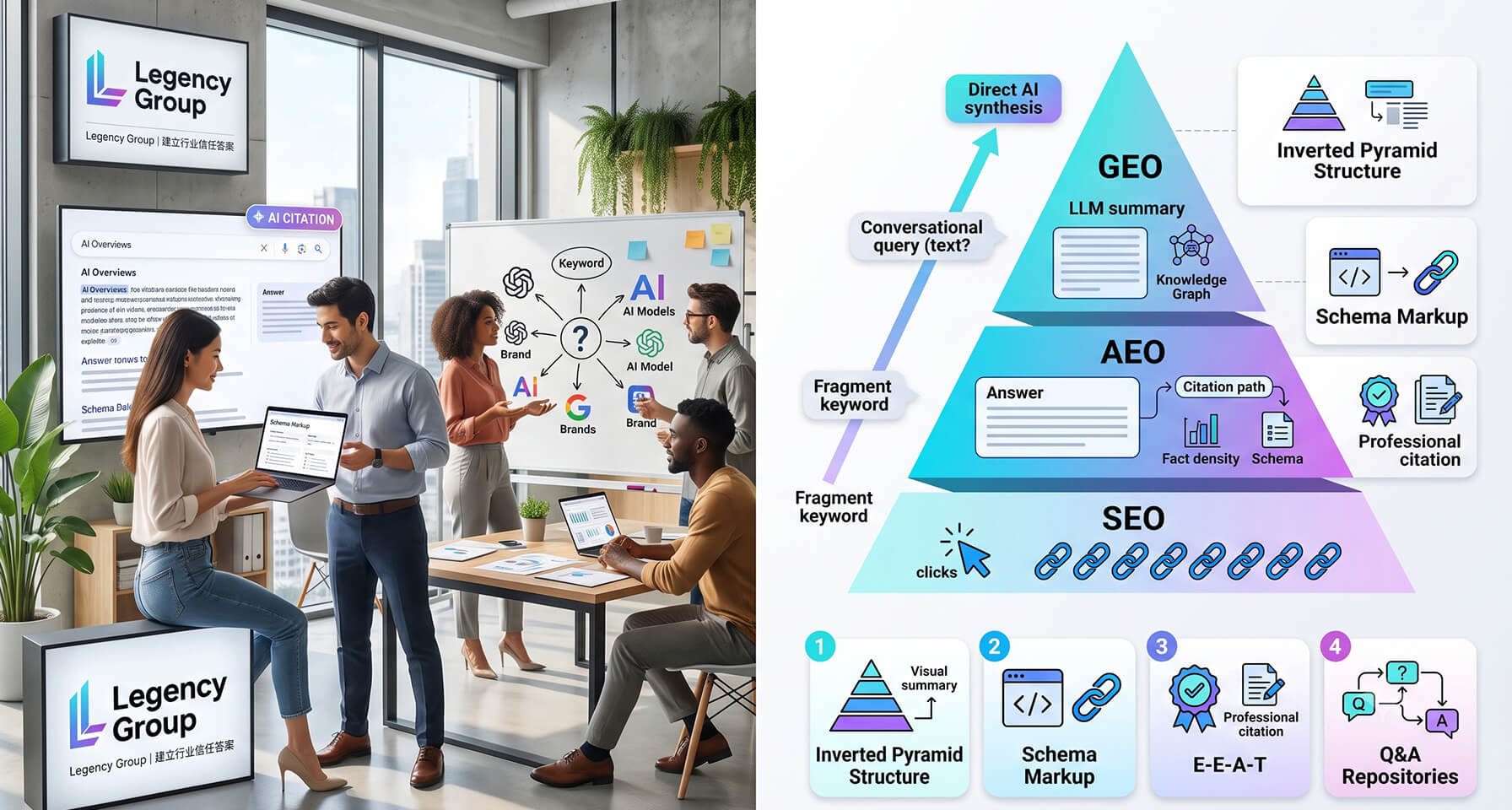
Where traditional SEO focuses on winning clicks by ranking web pages, AEO focuses on winning citations and direct placement inside AI summaries.
SEO vs. AEO vs. GEO: Understanding the Framework
As search engine technology evolves, marketers now talk about three complementary layers of optimization:
| Optimization Layer | Core Goal | Primary Focus | Output Format |
| SEO (Search Engine Optimization) | Rank web pages | Technical health, keywords, backlinks | Ten Blue Links, organic clicks |
| AEO (Answer Engine Optimization) | Be cited as the direct answer | Q&A formatting, schema, fact density | AI Snippets, voice results, knowledge panels |
| GEO (Generative Engine Optimization) | Shape holistic AI responses | Brand entity authority, consensus data | Long-form LLM summaries (ChatGPT, Claude) |
Rather than replacing traditional SEO, AEO acts as a strategic evolution built on top of it. Without a sound technical website (SEO), search crawlers can't find your content. But without structured clarity (AEO), AI engines won't choose your content as their answer.
Why Is AEO Essential for Success Right Now?
1. The Rise of "Zero-Click" Searches
When Google displays an AI Overview at the top of the search result page, users get their answer immediately without needing to visit an external website. Studies show that organic click-through rates on traditional top positions drop significantly when an AI Overview is present.
If your brand is not featured as a cited source within that AI answer, your organic visibility effectively disappears for that query.
2. Conversational Intent Replaces Keyword Strings
Users no longer type fragmented keyword strings like "best marketing agency budget" into a search bar. Instead, they ask conversational questions: "What is a reasonable digital marketing budget for a mid-sized B2B company looking to scale lead generation?"
AEO positions your content to directly answer these natural, conversational queries in clear, authoritative language that AI algorithms can easily extract.
3. High Information Gain and Fact Density Win
AI large language models (LLMs) filter out fluff. In the past, traditional blog posts often buried key answers under hundreds of words of introduction to inflate word count or dwell time.
Answer engines do the opposite: they reward Fact Density and Information Gain. Content that gets cited by AI provides the key facts upfront, uses bullet points, includes verifiable data, and gets straight to the point.
Actionable Strategies to Optimize Your Content for AEO
If you want your brand to become the trusted answer in AI-driven search, follow these practical steps:
Adopt the "Inverted Pyramid" Content Structure
Put the direct answer at the top of your page or section. Follow your heading (e.g., an H2 framed as a question) immediately with a clear, concise 40-to-60-word summary answering that question directly. Follow up with detailed context, examples, and data underneath.
Implement Schema Markup Rigorously
AI search engines rely heavily on structured data to parse web pages accurately. Ensure your development team or CMS utilizes:
- FAQ Schema: Standardizes question-and-answer pairs.
- How To Schema: Breaks down multi-step guides for transactional searches.
- Organization & Product Schema: Establishes your brand entity firmly in the global Knowledge Graph.
Focus on E-E-A-T (Experience, Expertise, Authoritativeness, Trustworthiness)
AI algorithms favor sources with demonstrated human expertise. Use expert quotes, cite original statistics, maintain consistent brand information across directories, and link out to trustworthy primary research.
Build Q&A Repositories
Identify the exact questions your ideal clients ask during their decision-making process. Create dedicated FAQ pages or incorporate robust Q&A modules on key service landing pages.
Conclusion: Future-Proofing Your Brand with Legency Group
The shift from retrieving links to synthesizing answers represents a fundamental change in how the web functions. Traditional search engine optimization creates the foundational infrastructure, but Answer Engine Optimization is what ensures your business remains visible, cited, and recommended in an AI-first world.
At Legency Group, we help brands navigate the modern search ecosystem. From technical site health to strategic content engineering, we ensure your business doesn't just rank—it becomes the trusted answer in your industry.